ServicesDrying and Dehumidifying
Drying and Dehumidifying in Hopewell
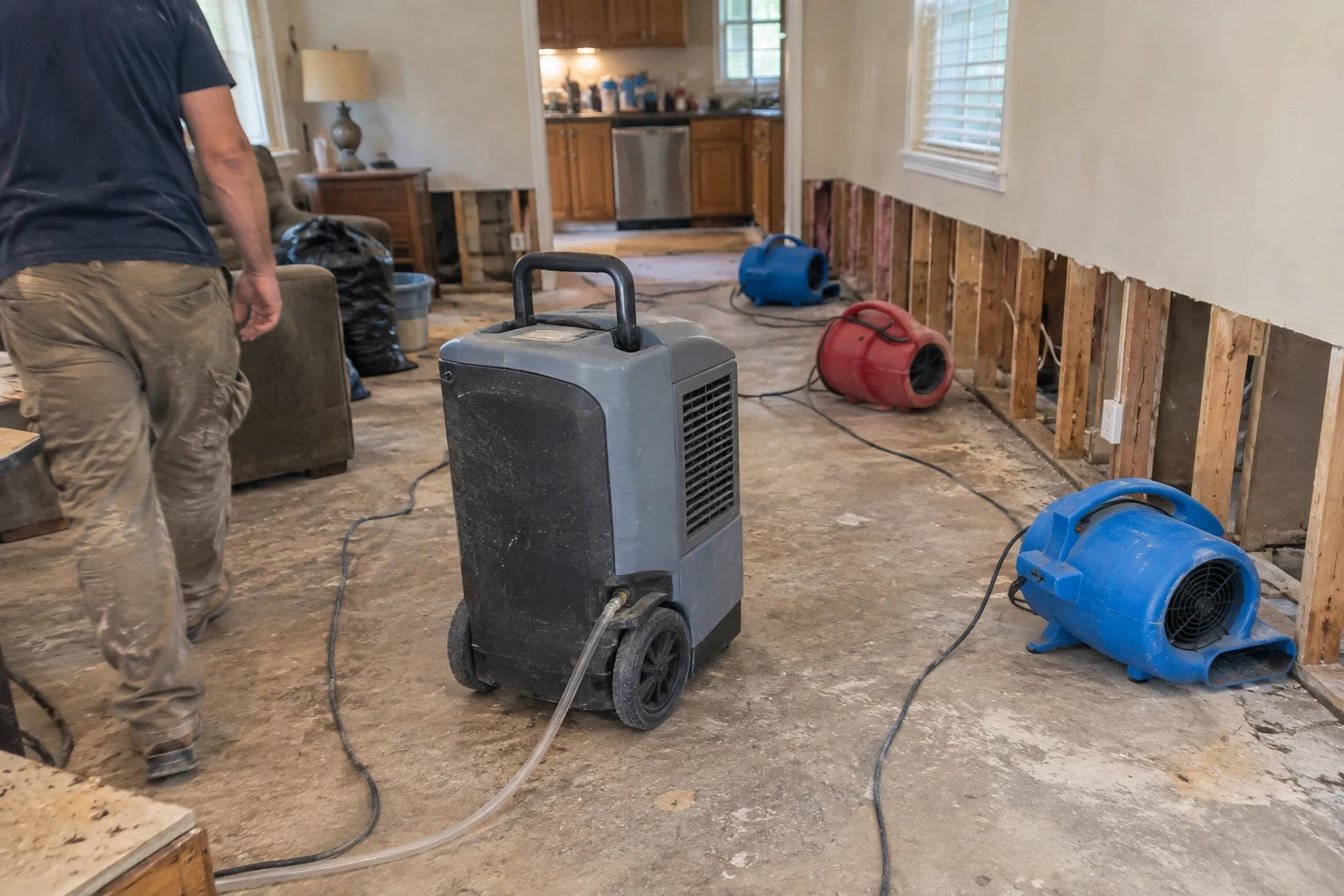
Once the standing water is gone, the hidden moisture is what causes trouble. We set up air movers and dehumidifiers, measure what's inside your walls and floors, and keep at it until the readings say your home is dry.
Dry to the touch is not the same as dry
Drywall, wood subfloors and insulation soak up water like a sponge. The surface can feel fine in a day or two while the material behind it stays wet for weeks. That trapped moisture is what warps hardwood, loosens tile, stains ceilings and gives mold a place to start.
Drying and dehumidifying is the step that pulls that moisture back out. It usually follows water extraction, and it's the part that decides whether a leak becomes a small repair or a big one. We treat it the way we'd want it done in a neighbor's house: measured, explained and finished properly, not packed up early because the carpet looks fine.
What our drying work includes
- Tracing where the water went
- Before any fans go in, we check floors and walls with handheld meters and an infrared camera, including the spots behind baseboards and under flooring. That shows you exactly how far the water spread.
- Air movers placed with a plan
- High-velocity fans are angled along walls and across floors to speed evaporation. Placement matters more than the number of fans, so we set them where the readings point.
- Commercial dehumidifiers
- Evaporated water has to go somewhere. Our dehumidifiers pull it out of the air so it doesn't settle back into drywall, furniture or the next room over.
- Access for trapped water
- Sometimes we drill small holes low on a wall or lift a baseboard to vent a cavity. We only do it where readings show water is stuck, and we tell you first.
- Daily readings and a written log
- We come back to check the numbers and adjust the setup. You can see the readings drop each day, so you know why the equipment is still running.
Signs your home still needs drying
A musty smell that won't leave
That damp, earthy odor usually means moisture is sitting somewhere you can't see. It often shows up a few days after a leak seemed handled.
Floors cupping or lifting
Hardwood that curls at the edges or laminate that starts to bubble is reacting to water underneath. Drying early can sometimes save boards that would otherwise need replacing.
Soft spots or bubbling paint
Drywall that feels spongy, or paint and wallpaper that blisters, has taken on more water than it can release on its own.
Condensation and sticky air
Fogged windows, damp-feeling rooms or a crawl space that stays clammy point to humidity that household fans can't handle. Virginia summers make this worse, which is one reason a proper dehumidifier setup speeds things up.
A leak that happened more than a day ago
Even if you mopped up quickly, water that sat overnight has likely wicked into walls and subfloor. A free inspection tells you for sure.
How a drying job runs
- 1
Inspection and readings
We walk through with you, take moisture readings and show you what we find. If there's still standing water, we handle water extraction first.
- 2
Setup and protection
We place air movers and dehumidifiers, run cords safely and keep walkways clear. Furniture gets moved or blocked up off wet floors.
- 3
Daily check-ins
Each visit we record readings, empty or adjust equipment and move fans as areas dry. Most jobs run a few days, depending on the materials and how long they were wet.
- 4
Final readings and wrap-up
When the materials reach normal dry levels, we remove the equipment and walk you through the log. If anything needs replacing, we'll explain the options, including our repairs and rebuild work.
What affects the cost of drying
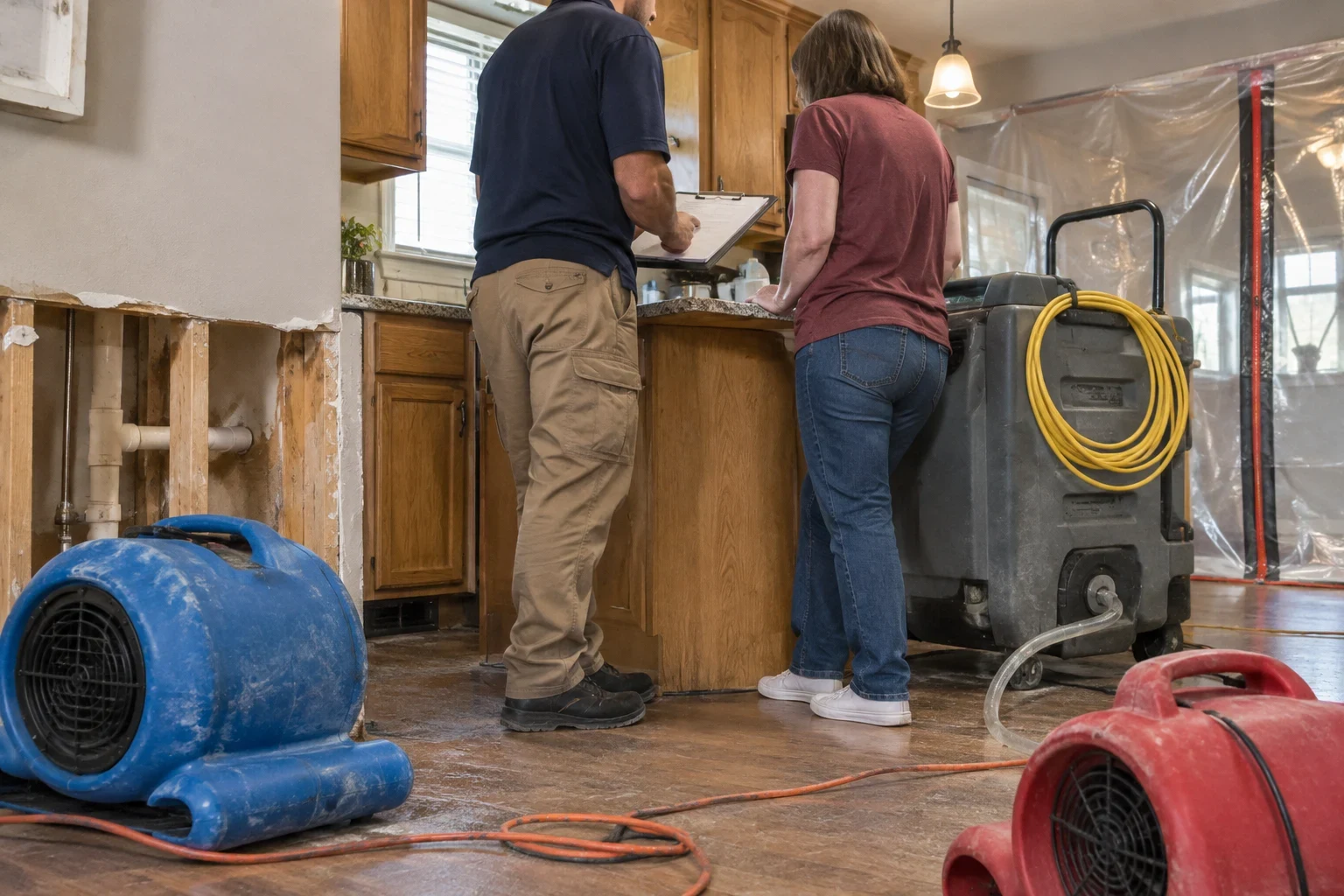
The price of drying comes down mostly to how much material got wet and how many days the equipment has to run. After the inspection, you get a written estimate from us with each line explained. If your insurance company is involved, we work with most major insurance companies and can pass along our readings and photos to support your claim.
- Size of the wet area
- A single bathroom floor needs far less equipment than a whole finished basement. The count of air movers and dehumidifiers grows with the square footage.
- Materials involved
- Carpet pad, hardwood, plaster and insulation each give up water at their own pace. Denser materials keep the machines running longer.
- How long the water sat
- When a leak is caught early, the water stays near the surface. After a few days it creeps deeper, and wall cavities may need to be opened to dry.
- Where the water came from
- A burst supply line leaves fairly clean water that we can dry right away. Floodwater or a sewer backup carries contaminants, so flood cleanup or sewage cleanup usually comes before any drying starts.
Drying and dehumidifying questions
Something not covered here? (804) 408-4219
How long will the equipment be in my home?
Most drying jobs take about three to five days. The readings decide, not the calendar. We'll show you the numbers so you know where things stand each day.
Will a box fan and a hardware-store dehumidifier do the job?
If the spill was small, stayed on the surface and got wiped up right away, they might be enough. Once water has slipped under flooring or into a wall, home units rarely remove moisture quickly enough, and mold can get going in the meantime. A quick inspection tells you which case you're dealing with.
Is the equipment loud?
It hums steadily, a bit like a strong window air conditioner. We'll place it to keep bedrooms as quiet as we can and talk with you about which rooms you need to use.
Will you have to cut into my walls?
Only when readings show water trapped inside a cavity. Usually that means a few small holes near the floor or removing a baseboard. If drywall is too far gone, we'll explain why before removing anything.
The leak just happened. What should I do while I wait?
Shut off the water if you can, then pick up the phone. Our standard is on site in 60 mins or less, and our emergency water damage response covers Hopewell plus neighbors in Colonial Heights, Petersburg and Chester. The sooner the dehumidifiers are running, the less water soaks into your floors and walls.
Let's get your home properly dry
Tell us what happened and we'll come take readings, show you what's wet and lay out a plan. No pressure, just a clear answer about what your home needs.