ServicesMold Remediation
Mold Remediation in Hopewell
A musty smell or a spreading stain is worth taking seriously, but it is rarely a reason to panic. We come out, show you what is growing and where the moisture is coming from, and explain a clear plan to remove it from your home safely.
What mold remediation actually means
Mold needs moisture, something to feed on and a little time. Give it a slow leak behind a vanity, a damp crawl space or drywall that never fully dried after a spill, and it can take hold within a couple of days. Remediation is the work of containing that growth, removing it and the materials it has ruined, and drying the area so it does not come back.
We are honest about one thing up front: nobody can make a house completely free of mold spores, because they are in the air everywhere. The goal is to bring the affected area back to normal conditions and stop the moisture that caused the problem. Long, humid summers make that second part matter, since a damp spot will keep feeding new growth until the source is fixed.
If the mold followed a recent leak or flood, the work often overlaps with drying and dehumidifying. We will tell you which steps your home needs, and which it does not.
Everything that goes into a mold job
- Finding the full extent
- Meters and a close look under sinks and behind baseboards tell us how far the dampness has traveled. The mold on the surface is often a small piece of what is actually there.
- Sealing off the work area
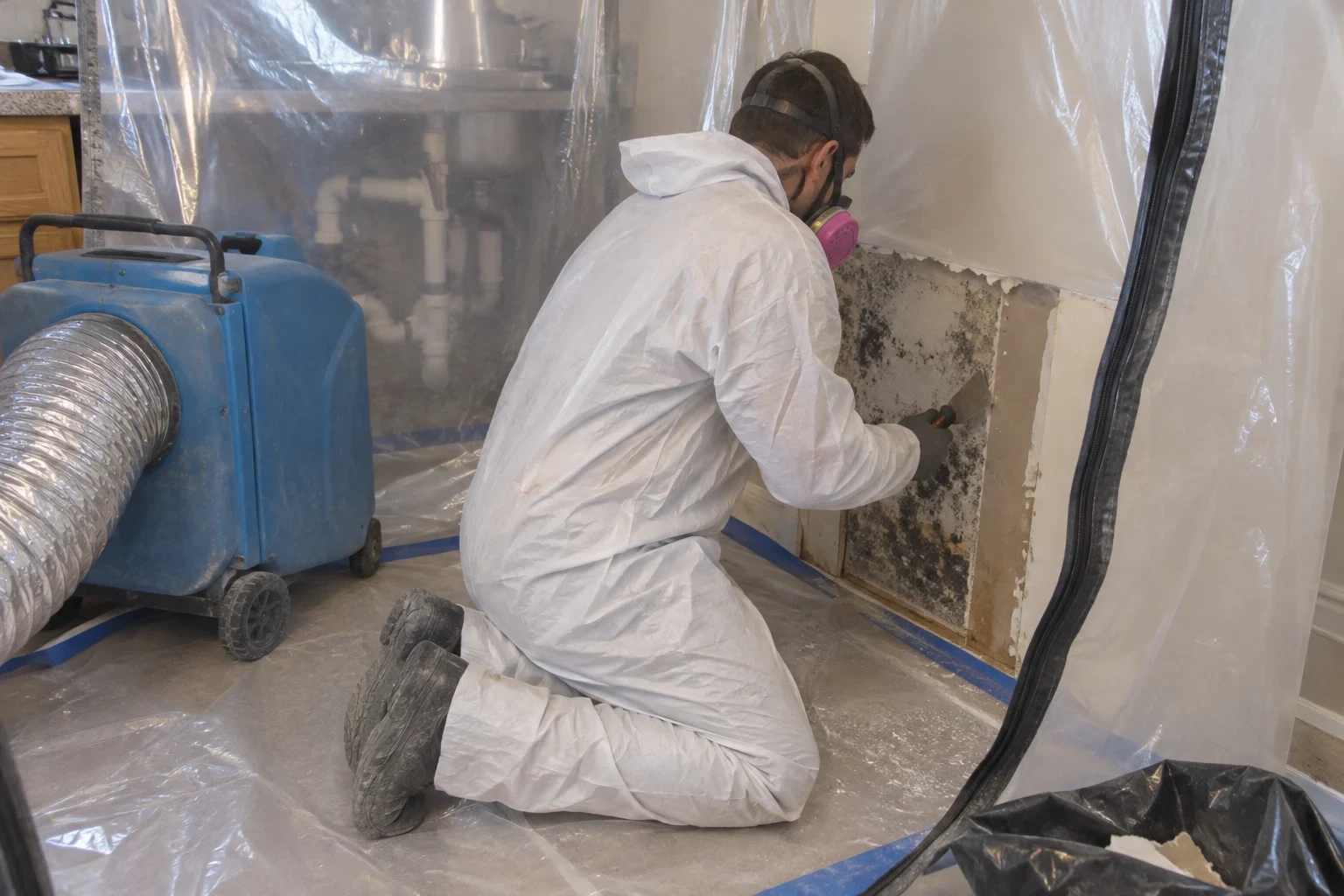
- Plastic barriers go up before we touch anything, and HEPA air filtration machines run inside the sealed space. That keeps spores from drifting into the bedrooms and living areas of your home.
- Taking out ruined materials
- Drywall, insulation and carpet pad absorb mold deep into their fibers, so the affected sections are cut out and bagged. We remove what is damaged and nothing more, not entire rooms out of habit.
- Cleaning what can stay
- Studs, subfloor and other solid materials are HEPA vacuumed, scrubbed and treated. You see photos of how they looked before and after.
- Drying and stopping the cause
- The area is dried back to normal moisture levels, and we show you the leak, drainage trouble or poor ventilation that started it. When walls or floors need to be put back together, our repairs and rebuild service takes it from there.
Signs it is time to have mold looked at
A musty smell that lingers
An earthy, stale odor that returns after you air out a room usually means hidden growth. It is often strongest in closets, basements and bathrooms.
Spots or staining on walls and ceilings
Gray, green or black speckles, or yellowish water rings, point to moisture behind the surface. Painting over them hides the problem without stopping it.
Damage from an old leak
If a pipe, roof or appliance leaked weeks ago and the area was never professionally dried, mold may be growing inside the wall cavity.
Peeling paint or soft drywall
Bubbling paint, warped trim and drywall that feels spongy all signal ongoing dampness.
A damp crawl space or basement
Condensation on ductwork, wet insulation hanging under the floor or a constant humid feel below the house are common places for mold to start.
Symptoms that ease when you leave
Some people notice stuffiness or irritated eyes at home that clear up elsewhere. That is worth mentioning to your doctor and worth having the house checked.
What affects the cost of mold remediation
We price every mold job from what we see at the inspection, so we will not guess at a number over the phone. Once we have looked, you get a written estimate that breaks out each part of the work. If opening a wall turns up more than expected, we stop and talk with you before going further.
How much area is affected
A patch under a bathroom sink is a very different job from growth spread across a basement or crawl space. The size of the area sets how much containment, labor and disposal the job needs.
What the mold is growing on
Solid wood framing can usually be cleaned and kept. Drywall, insulation and carpet soak mold deep into their fibers, so affected pieces have to be removed and replaced later, which adds to the work.
Access
Tight crawl spaces, attics and spots behind cabinets take more time and setup than an open wall.
The moisture source
If an active leak or a drainage problem is still feeding the mold, it has to be dealt with as part of the job or the growth will return.
How a mold job runs, start to finish
- 1
Free on-site inspection
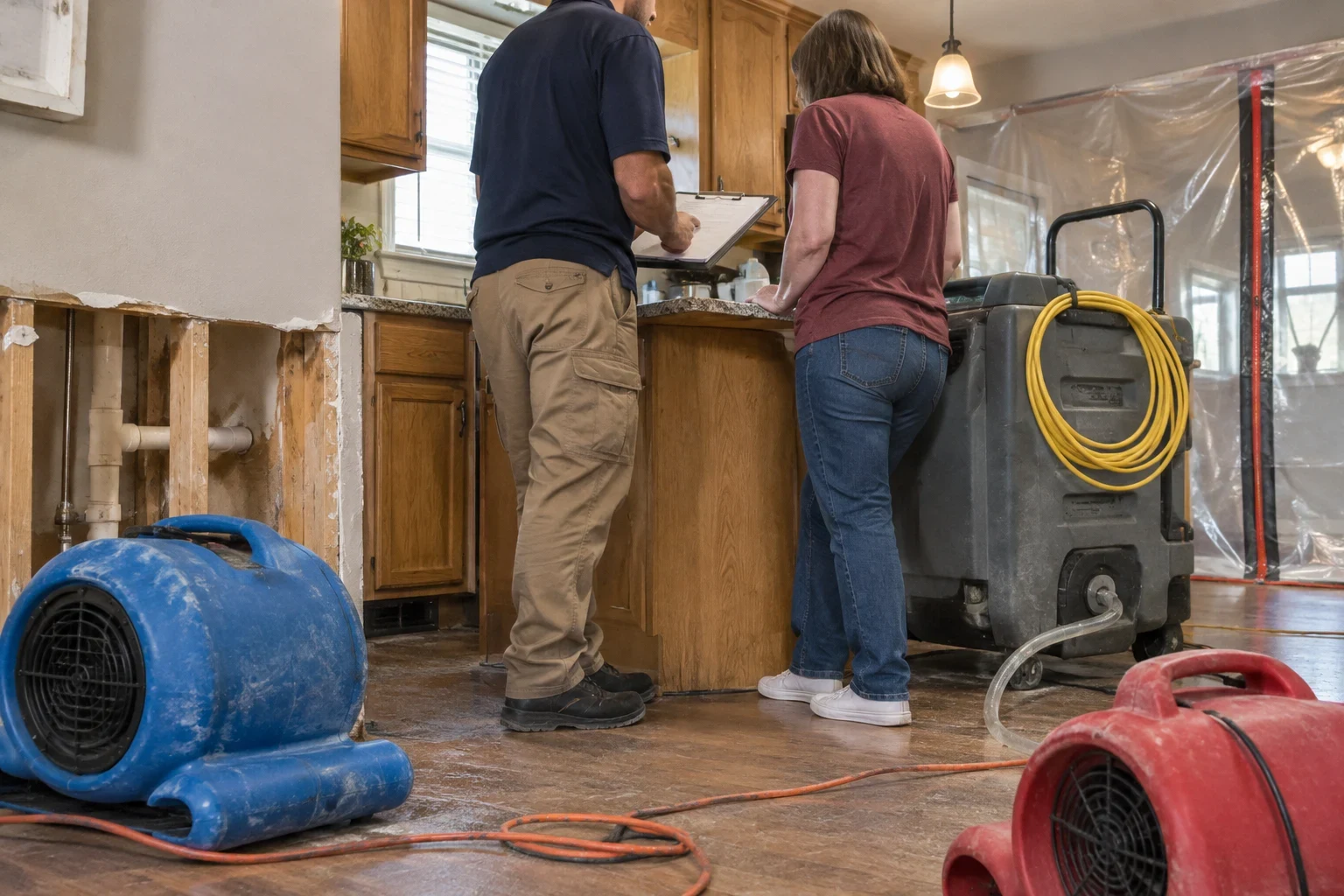
We go room by room with you, check moisture levels and take pictures along the way. Then we tell you plainly how large the problem is, and whether it calls for remediation at all.
- 2
Your plan in writing
Before any work begins, you get a line-by-line list of the areas we will seal off, the materials coming out and the drying required. If you are filing a claim, we walk you through the photos and records your insurance company will probably want.
- 3
Protecting your home and removing damage
The crew covers the floors along our path, builds the containment and pulls out damaged materials. Debris is bagged inside the sealed space before it is carried out of the house.
- 4
Treating, drying and confirming
What remains is cleaned and treated, then dried with dehumidifiers and air movers. Containment only comes down after fresh moisture readings show the area is dry.
- 5
Final walkthrough
We review the finished space together, tidy up and talk about any repairs still ahead. You leave knowing what we did and which warning signs to watch for.
Mold remediation questions we hear often
Is bleach enough to get rid of mold?
On a small spot on a hard, sealed surface like tile, a careful wipe-down may be all it takes. Bleach stays on the surface of drywall and wood, though, and it leaves the moisture underneath untouched. If the patch is bigger than a small spot, keeps returning or comes with a musty smell, we would be glad to come check it.
Will my homeowners insurance cover mold?
It depends on your policy and on what caused the growth. Mold from a sudden event, like a burst pipe, is often viewed more favorably than mold that built up slowly from a drip nobody noticed. We work with most major insurance companies and can document what we find, but the coverage decision belongs to your adjuster.
Will we have to leave the house while you work?
Most families stay put. The sealed containment and filtered air keep the work zone separate from the rest of your home. If the growth is widespread or someone in the house has health concerns, we will talk honestly about whether a few nights elsewhere makes sense.
How many days does mold remediation take?
A typical job runs a few days from setup to the final moisture check. Crawl spaces, larger areas and jobs that need a lot of drying take longer. You will get a realistic timeline when we inspect.
How soon can someone come out?
We are on site in 60 mins or less. Speed counts most when the mold is tied to a fresh leak, because stopping the water early keeps growth from spreading further.
Could the mold grow back?
Mold comes back when moisture comes back. That is why we put as much care into tracking down and fixing the source as into removing the growth, and why we tell you what to keep an eye on afterward.
Let us take a look at that musty corner
We will come to your home, find where the moisture is coming from and explain your options plainly. The inspection is free, and there is no pressure to book anything.