ServicesWater Extraction
Water Extraction in Hopewell, VA
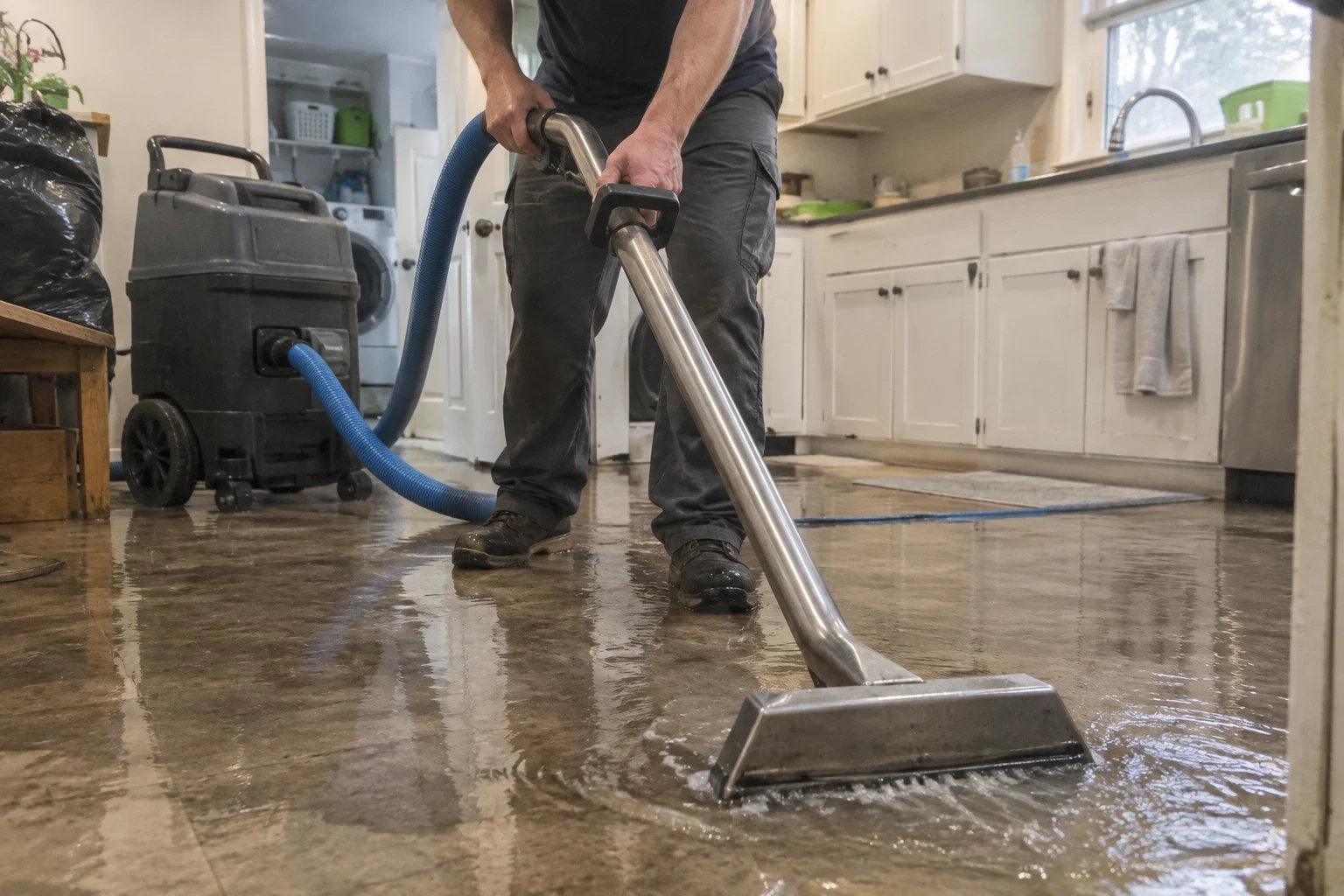
Standing water doesn't stay on the surface for long. It works its way into carpet pad, drywall and subfloor, so we arrive with real extractors, pull it out and show you every spot that got wet. Your on-site inspection is free, and we pick up day or night.
Getting the water out is the first job
Water extraction means removing the liquid itself: the puddle on the kitchen floor, the inch of water across a finished basement, the soaked carpet that squishes underfoot. Fans and dehumidifiers can't do this part. They handle moisture in the air and materials, but they are slow and costly if they are fighting water that should have been vacuumed out first.
We use truck-mounted and portable extraction units with weighted tools that press into carpet and pad, so we pull out far more water than a shop vac can. On a job like this, the difference between a good extraction and a rushed one shows up later in drying time, smell and whether the flooring can be saved.
We treat your home the way we would want a neighbor to treat ours. We cover the paths we walk, we move furniture carefully, and we tell you plainly what we found before we start anything.
What our water extraction covers
- Stopping the source
- If water is still coming in, we help find and shut off the source first, whether it is a supply line, a water heater or a failed washing machine hose. There is no sense extracting water that keeps arriving.
- Carpet and pad extraction
- Weighted extraction tools squeeze water out of carpet and the pad beneath it. We check whether the pad can stay or needs to come up, and we explain why either way.
- Hard floors and subfloor
- Hardwood, laminate and vinyl trap water underneath. We remove the surface water, then check the subfloor with moisture meters so hidden water doesn't sit there and cup or warp the boards.
- Basements and crawlspaces
- We pump out standing water in basements and get into crawlspaces, which are common under older homes around Hopewell and easy to overlook until they start to smell.
- Moisture mapping and photos
- Before we leave, we map wet areas with meters and take photos. You get a clear record of the damage, which also helps if you file an insurance claim.
Signs you need water extraction now
Water you can see or step in
Any standing water, even a thin layer, needs to be removed with real equipment. Towels and a mop leave most of it in the floor.
Carpet that feels wet underfoot
If the carpet squishes or feels cold and damp, the pad below is saturated. That pad holds far more water than the carpet on top.
Water spreading under walls
Damp baseboards or a dark line creeping up drywall mean water has wicked into the wall cavity.
A musty smell after a leak
A sour or earthy smell within a day or two usually means water is trapped somewhere you can't see. Mold can start growing in 24 to 48 hours.
Water in the basement after heavy rain
Summer storms and the remnants of tropical systems can push groundwater in quickly. If it's pooling, it won't dry on its own.
How the day goes when we arrive
- 1
You call, we head out
Give us a quick picture of what happened and which rooms are wet. Our crew leaves right away and is on site in 60 mins or less, at any hour.
- 2
Free walk-through
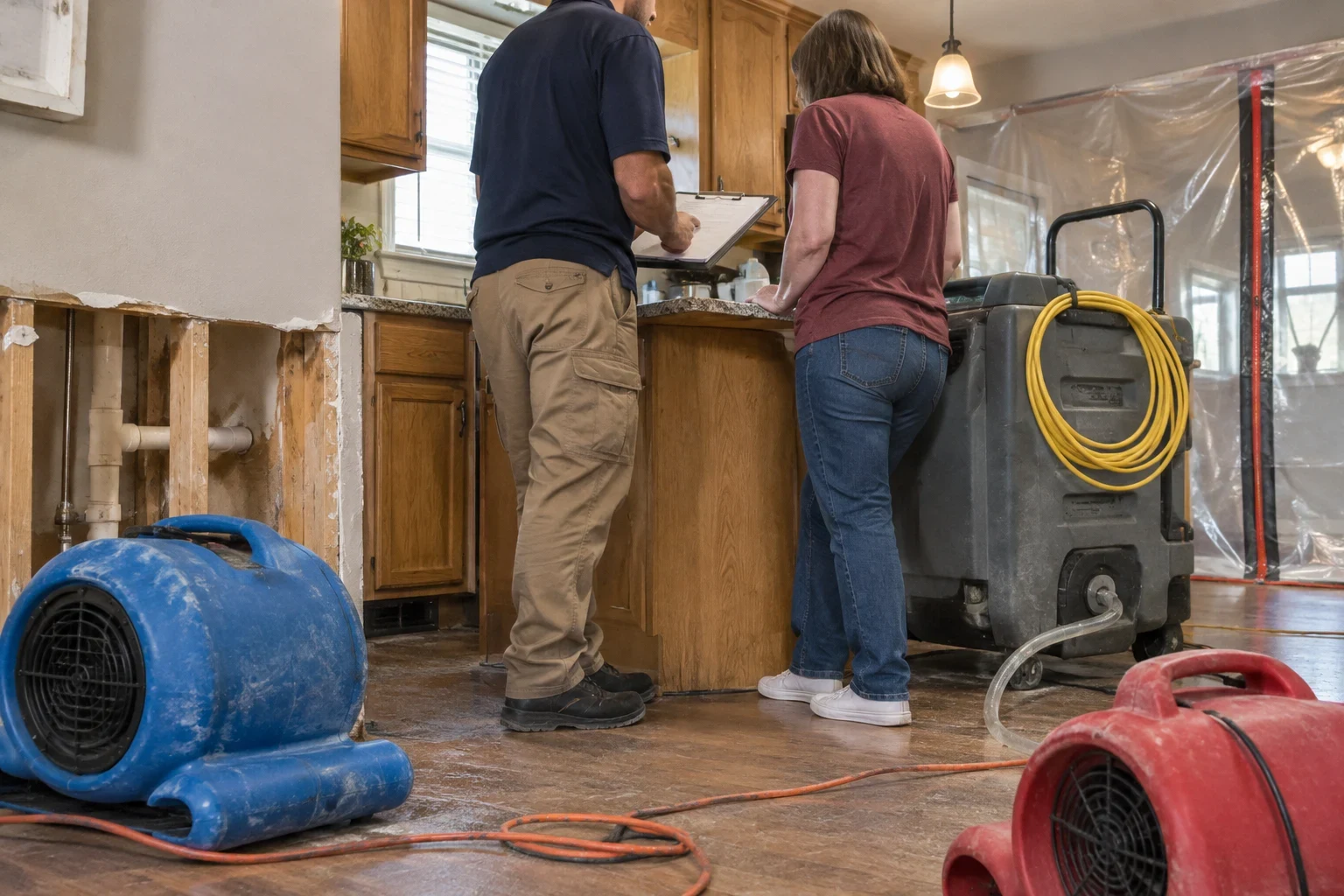
We look at the affected rooms, check moisture levels and tell you what we recommend. Nothing starts until you understand the plan.
- 3
Protect and move
We lay floor protection, move furniture out of the wet area and block legs with foam pads so stains and rust don't transfer.
- 4
Extract the water
We run the extractors room by room, working from the wettest areas outward, and pump basements or crawlspaces as needed.
- 5
Measure and set up drying
Once the water is out, we take readings again and, if needed, set up drying and dehumidifying equipment so the job is finished properly.
What affects the cost of water extraction
Every extraction is priced from what we actually find in your home, not from a guess on the phone. Once we've walked through the wet rooms, we write up an itemized estimate so you can see each part of the work before anything starts. If a claim is involved, we work with most major insurance companies, and we're glad to explain the usual steps a claim goes through.
- How much water and where
- An inch of water in one bedroom is a very different job from a flooded basement. The wet square footage and the depth of the water decide how long our equipment runs.
- Type of flooring
- Carpet over pad, hardwood and tile each call for different tools and take different amounts of time. Some pad holds so much water that removing it makes more sense than extracting it.
- Clean or contaminated water
- Water from a burst supply line is clean. Groundwater or a backed-up drain calls for extra protective steps, and true sewage is handled separately as sewage cleanup.
- Access and timing
- Tight crawlspaces, stairways and heavy furniture all add time. Water that has been sitting for days instead of hours usually means more work, too.
Water extraction questions
Something not covered here? (804) 408-4219
Can I just use a wet vac myself?
A wet vac can handle a small, clean spill on tile. On carpet, hardwood or anything bigger than a puddle, a household unit leaves most of the water behind in the pad and subfloor. That hidden water is what causes warped boards, lingering odor and mold.
Will my carpet have to be thrown out?
In many cases it can stay. If the water came from a clean source and we get to it early, the carpet usually dries well, even when the pad beneath needs replacing. If the water came in from outside or backed up from a drain, we'll be honest that pulling the carpet is usually the safer call.
Does homeowners insurance cover water extraction?
Sudden events like a burst pipe are often covered, while slow leaks and outside flooding tend to be treated differently. We work with most major insurance companies, and we give you photos and moisture readings to back up your claim. Your adjuster makes the coverage decision, and we'll help you understand each step as it comes.
How long will the extraction itself take?
A single wet room is usually finished in a few hours. When water has reached a whole basement or spread across several rooms, plan on us being there for most of the day. Drying the materials afterward is its own stage that runs several days, and our drying and dehumidifying page explains what to expect.
What should I do before you get there?
If it's safe, shut off the water and switch off power to the wet areas at the breaker. Lift small valuables and papers up off the floor. Stay out of standing water near outlets or appliances.
Water on the floor? Let's get it out.
We serve Hopewell, Colonial Heights, Petersburg, Chester and nearby, day or night. Call and we'll come look, tell you what we see and start when you're ready.