ServicesFlood Cleanup
Flood Cleanup in Hopewell
When rising water gets into your home, we pump it out, haul away the mud and ruined materials, clean and sanitize what can be saved, and start drying the structure. You get a clear plan and honest answers, and you never have to sort through the mess alone.
What Flood Cleanup Covers
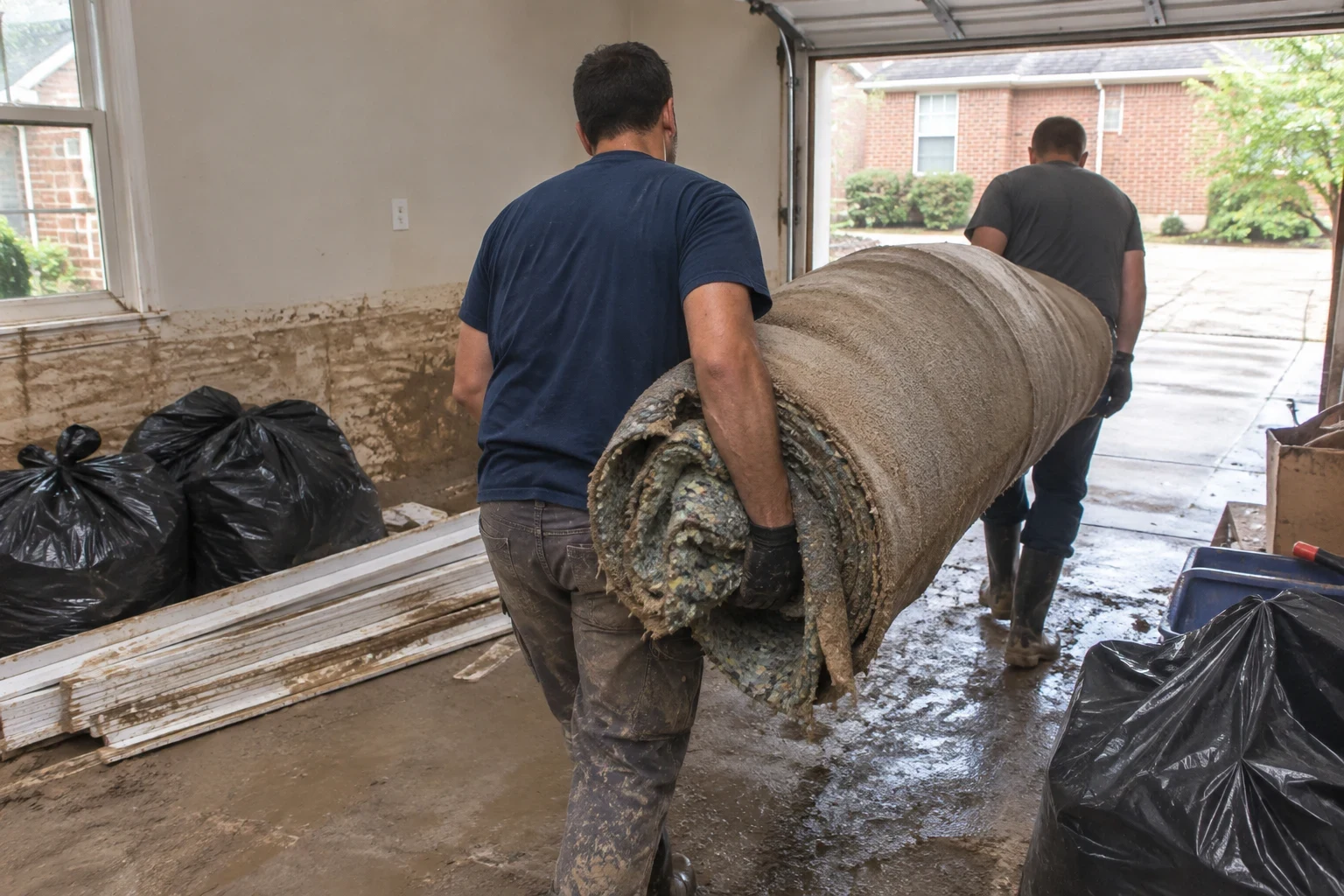
Flood cleanup is the work that happens after outside water comes in: a creek or river over its banks, storm runoff through a basement door, or groundwater pushing up into a crawl space. That water carries soil, fertilizer, fuel and sewage, so it is treated as contaminated. Soaked carpet pad, drywall and insulation that it touched usually have to go.
We handle it the way we would want it handled at a neighbor's house. We show you what we found, explain what needs to come out and why, and leave anything that can honestly be cleaned and dried. Our crew is on site in 60 mins or less, and we answer the phone around the clock because floods rarely wait for business hours.
What the Work Includes
- Pumping and water extraction
- Truck-mounted and portable pumps pull standing water out of basements, crawl spaces and living areas. Our water extraction equipment also draws water out of carpet and subfloor so drying starts sooner.
- Mud and debris removal
- Floodwater leaves silt behind on floors, inside wall cavities and under appliances. We shovel, scrape and wash it out before it hardens.
- Removing what cannot be saved
- Wet drywall is cut above the water line, and soaked insulation and carpet pad are bagged and hauled away. We photograph items before removal so you have a record for your claim.
- Cleaning and sanitizing
- Studs, slabs, joists and salvageable surfaces are cleaned and treated with an antimicrobial to deal with bacteria the water carried in.
- Structural drying
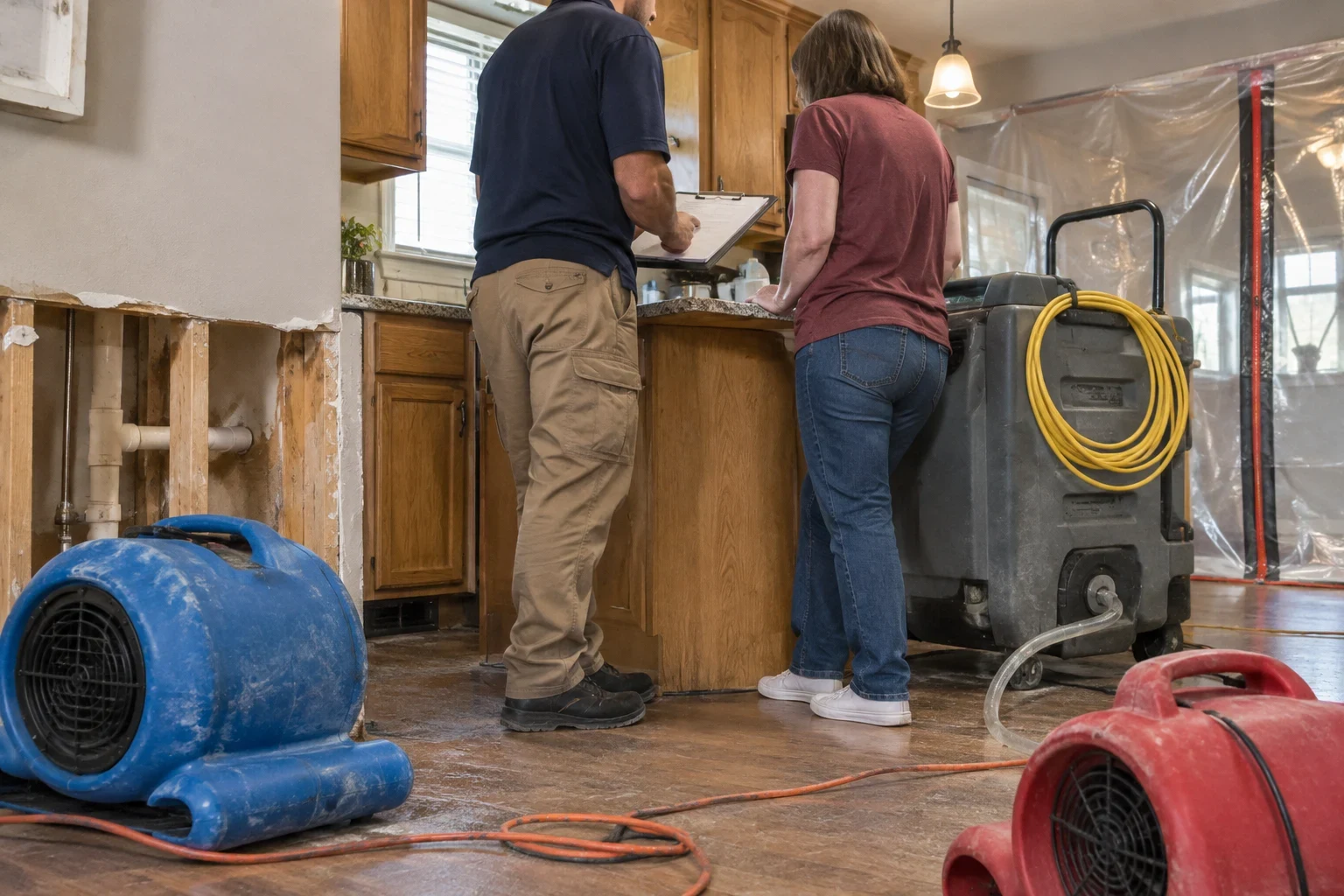
- Air movers and dehumidifiers run until moisture readings in wood and concrete reach normal levels. Our drying and dehumidifying page explains that step in more detail.
Signs You Need Flood Cleanup
Standing water after a storm
Any water pooled on a floor, in a basement or in the crawl space after heavy rain needs to come out quickly. The longer it sits, the more it soaks into wood and drywall.
A muddy line on the walls
A brown stain or silt mark shows how high the water reached. Everything below it, including insulation inside the wall, is likely wet.
Warped floors or loose baseboards
Hardwood that cups and laminate that lifts mean water got underneath. Baseboards pulling away from swollen drywall point to the same thing.
A sour or sewage smell
Floodwater often mixes with sewer backflow. If it smells like sewage, our sewage cleanup steps apply and nobody should handle it without protection.
Damp, musty air days later
If your home still smells musty after the water is gone, moisture is trapped somewhere. Mold can start growing within a couple of days.
What Affects the Cost of Flood Cleanup
No two floods leave the same mess, so we set a price only after we have walked your home and measured the moisture. Before any work starts, you get a written breakdown of what we plan to do. We work with most major insurance companies, and we are glad to walk you through what a claim tends to involve, while the coverage decision stays with your adjuster.
How much area got wet
Water that stayed in a single room calls for far less labor than water spread through a whole finished basement. The square footage involved and the height the water reached on the walls account for most of the work.
Water contamination
Outside floodwater and sewage need protective gear, more removal and more sanitizing than a clean supply-line leak.
Materials that must come out
Carpet, pad, drywall, insulation and cabinets each add removal and disposal time. Plaster and hardwood can take longer to deal with than newer materials.
Access and drying time
Tight crawl spaces are slow to work in. Thick slabs and dense framing hold water longer, which means equipment stays on site more days.
How a Flood Cleanup Job Runs
- 1
You call, we head over
On the phone, give us a quick picture of the flooding and which rooms it reached. Once we arrive, we make sure the electricity near the wet areas is safe and then go room by room with you.
- 2
Inspection and a clear plan
We use moisture meters to map how far the water traveled, photograph the damage, and explain what we recommend removing and what we expect to save. You decide before work starts.
- 3
Extraction, tear-out and cleaning
Water and mud come out first, then wet materials. Surfaces are washed and sanitized, and we keep the work area contained so dirt does not spread to dry rooms.
- 4
Drying and daily checks
Drying equipment runs for several days. We come back to take readings, move equipment as needed and keep you posted on progress.
- 5
Ready for rebuild
Once readings confirm the structure is dry, we can move straight into repairs and rebuild, from new drywall to flooring, so your home goes back together without a gap.
Flood Cleanup Questions
Is it safe to stay in my home during flood cleanup?
Many families stay put, especially when the water stayed in the basement or a single room and the electrical system checks out. We close off the work zone and place equipment so it disturbs you as little as possible. If sewage is involved or the damage reaches much of the house, we will tell you plainly that staying elsewhere is the better choice.
Can I start cleaning up myself before you arrive?
If it is safe, moving valuables and photos to a dry spot helps. Avoid wading into water near outlets or appliances, and do not handle water that smells of sewage. Take pictures of everything for your insurance before anything is thrown out.
Will my homeowners insurance pay for flood cleanup?
A lot rides on where the water came from. Rising water from outside is usually left out of a regular homeowners policy and falls under separate flood insurance, while water from a burst pipe or some storm damage may be treated differently. We record the damage in detail and explain each step of a claim, but the final coverage answer comes from your adjuster.
Do you serve homes outside Hopewell?
Yes. We also work in Colonial Heights, Petersburg, Chester, Enon and the surrounding area. Our Service Areas page lists the towns we cover.
How do you prevent mold after a flood?
Fast removal of wet materials, sanitizing and thorough drying are the best protection. We do not pull equipment until moisture readings are back to normal. If we find existing growth, we handle it with our mold remediation process.
Flooded? Let Us Help You Get Started
Call us any time, day or night. We will come look, explain what we see in plain terms, and lay out next steps before any work begins.